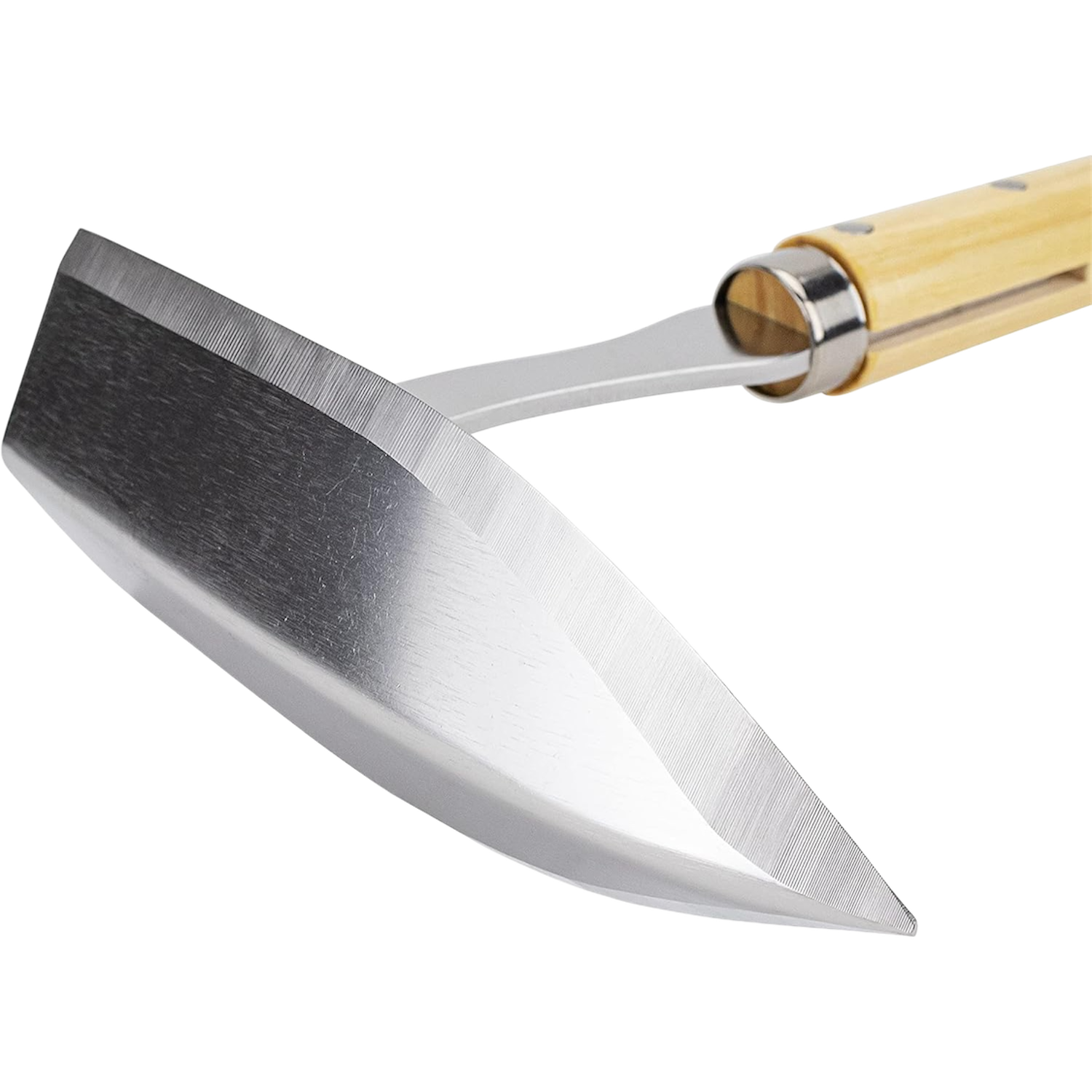
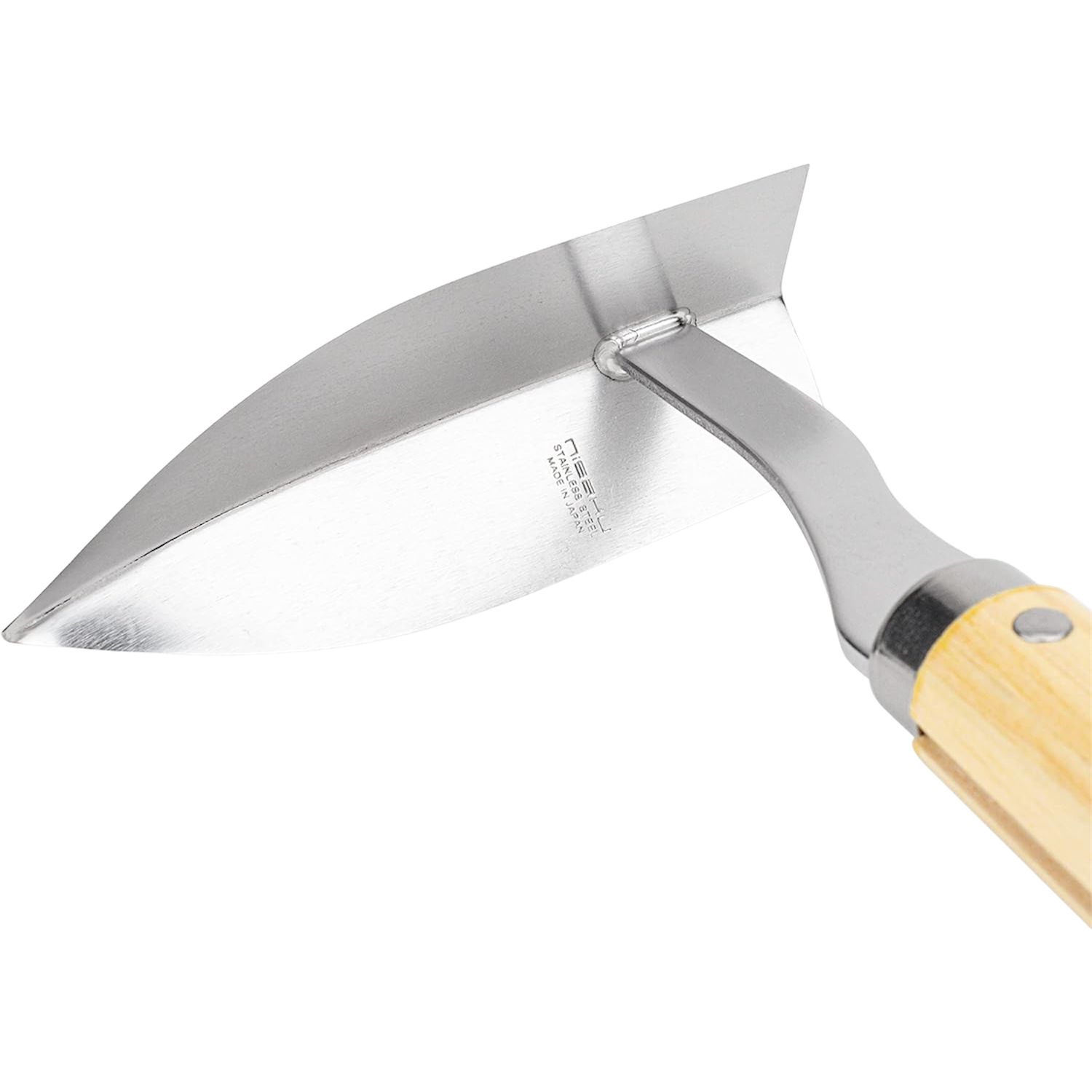
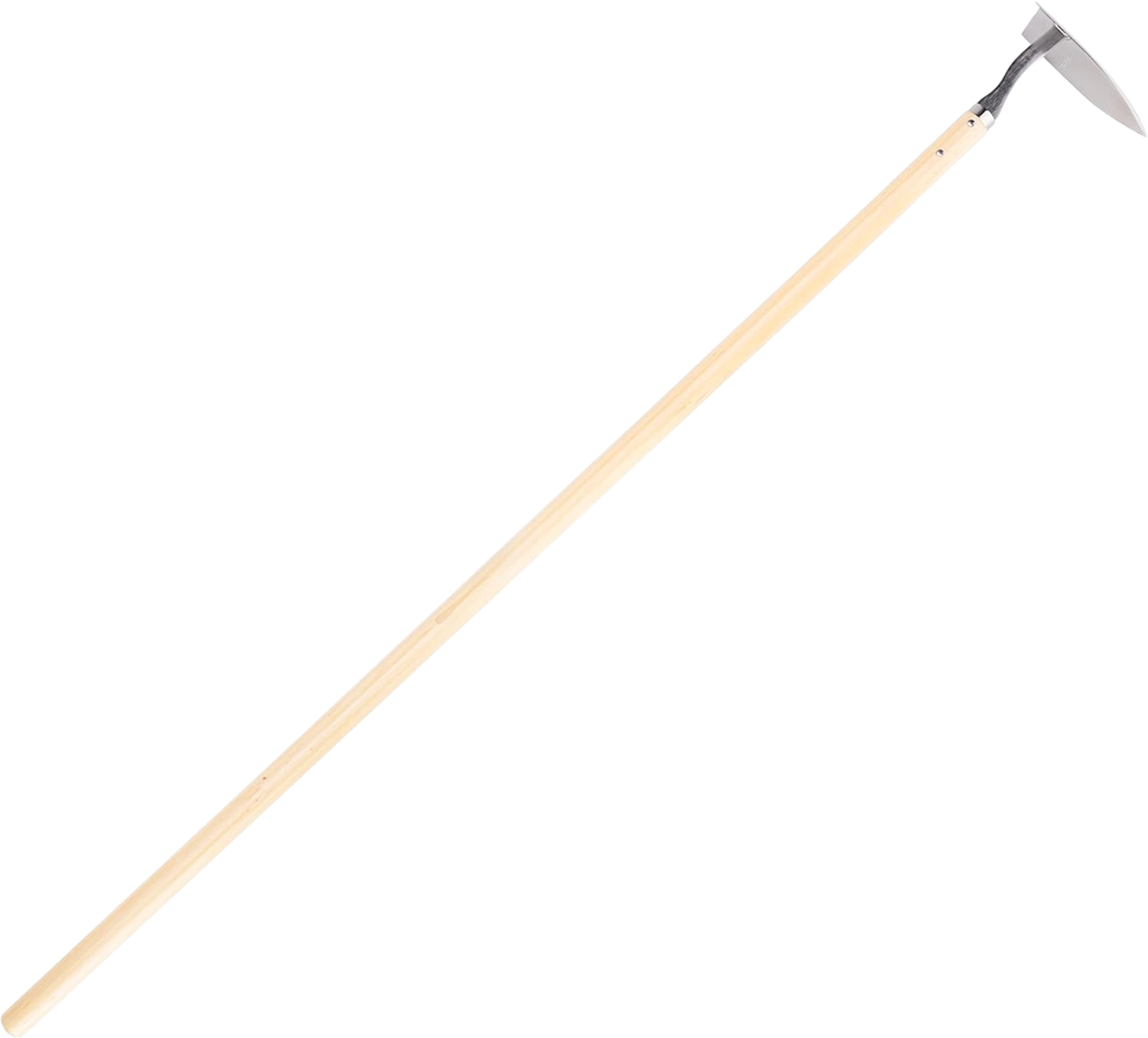
The Japanese Sankaku hoe, also known as a Delta hoe or Triangle hoe (since sankaku means “triangle” in Japanese), is a versatile and effective gardening tool with a distinctive sharp, triangular head.
It is considered a real workhorse in the garden and is primarily used for:
Weeding
- Shallow Weeding: Its razor-sharp, double-edged blade is ideal for skimming just below the soil surface using a push or pull motion, efficiently severing the roots of shallow-rooted weeds. This is often easier and more efficient than the chopping action of a common garden hoe.
- Precision Weeding: The fine point of the blade is great for weeding in tight spaces, such as between delicate plants, in rockeries, or in seed rows.
- Breaking Roots: The sharp edges can also slice through the roots of tougher, more established weeds.
Soil Work and Planting
- Cultivating and Aerating: The hoe is used to break up soil, loosen compacted dirt, and aerate the top layer, improving soil permeability for better plant growth.
- Digging: It can be used for general digging and breaking up clods of soil.
- Trenching and Furrows: The fine, tapered point is perfect for dragging through the soil to create V-shaped seed trenches or furrows for planting. The depth and width of the furrow can be controlled by how deep you push the point.
- Backfilling: When turned on its side, the curved blade excels at pushing or pulling soil back into place to cover seeds or backfill around new plants.
Other Uses
- Ditch Digging: The triangular design makes it effective for digging small ditches or channels.
- Working in Raised Beds: Shorter-handled versions are especially useful for working in raised garden beds or confined spaces where a long-handled tool is impractical.